James Nieh
Research
Research in the Nieh lab focuses on how natural and man-made stressors affect the biology of and cognitively sophisticated behaviors exhibited by bees. Our research focuses on two areas: (1) the selective pressures that may have shaped the evolution of communication in highly social bees and (2) honey bee health. We use the tools of Behavioral Ecology, Chemical Ecology, Animal Communication and Neuroethology to work with bumble bees, stingless bees, and honey bees. Five different topic areas are detailed below. For further information, please view the Nieh Lab Homepage.
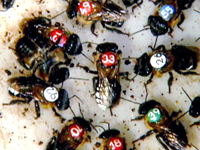
Evolution of communication
Selective pressures from competitors and predators has shaped social bee communication. Our lab studies multiple bee groups: honey bees, stingless bees, and bumble bees to learn how this communication works and why it may have evolved.
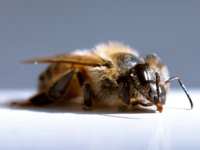
Honey Bee health
Concern is growing over pollinator declines. Our lab examines the effects of natural stressors, such as pathogens, and man-made stressors, such as pesticides, on honey bee health, foraging, flight, and orientation.
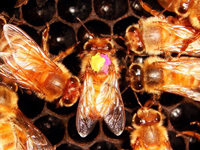
Superorganism inhibitory communication
What happens if conditions change and the communicated food source becomes depleted, contested, or dangerous? The honey bee stop signal provides inhibition that counteracts the positive feedback of honey bee waggle dances. Using field studies and modeling, we are studying this signal in detail and exploring conditions under which inhibitory signals may evolve.
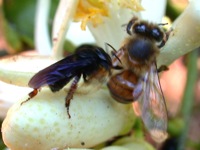
Superorganism inhibitory communication
We study olfactory eavesdropping in stingless bees and honey bees and examine the advantages of eavesdropping upon competitors and predators.
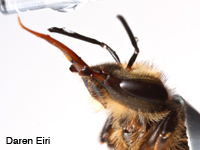
Neuroethology of bee learning and memory
Despite their small brain size and limited number of neurons relative to the central nervous systems of many vertebrates, social insects have evolved sophisticated learning and memory abilities and are therefore important models for animal cognition. However, these abilities can be impaired by field-realistic exposure to pesticides and other man-made stressors.
Go to full publication list
Select Publications
- Zarate D, Mukogawa B, Kohn J, Nieh JC (2023) Seasonal variation in defense behavior in European and scutellata-hybrid honey bees (Apis mellifera) in Southern California. Scientific Reports 13:12790. https://doi.org/10.1038/s41598-023-38153-2
- Zarate D, Travis D, Geffre A, Nieh JC, Kohn JR. (2023) Three decades of “Africanized” honey bees in California. California Agriculture. 77(1) 15-20. https://doi.org/10.3733/ca.2023a0004
- Dong S, Gaoying G, Lin T, Tan K, Nieh JC (2023) An inhibitory signal associated with danger reduces honey bee dopamine. Current Biology. https://doi.org/10.1016/j.cub.2023.03.072
- Dong S, Li J, Wang Z, Tan, K, Yang M, and Nieh JC (2023) Honey Bee Social collapse arising from allopatric hornet attacks. Entomologia Generalis. DOI: 10.1127/entomologia/2023/1825.
- Dong S, Lin T, Nieh JC, and Tan K (2023) Social signal learning of the waggle dance in honey bees. Science. 379: 1015-1018.
- Dong S, Sun A, Tan K, and Nieh JC (2022) Identification of giant hornet, Vespa mandarinia, queen sex pheromone components. Current Biology. 32(5): R211-R212. https://doi.org/10.1016/j.cub.2022.01.065.
- James CC, Sánchez D, Cruz-López L, Nieh, JC (2022) Fighting ability and the toxicity of raiding pheromone in an obligate kleptoparasite, the stingless bee Lestrimelitta niitkib. Behavioral Ecology and Sociobiology. 76:38. https://doi.org/10.1007/s00265-022-03129-1.
- Solórzano-Gordillo, EJ., Nieh, JC, Cruz-López L, Rojas J, and Sánchez D (2021) Gene flow from wild to managed colonies in the stingless bee Scaptotrigona mexicana and an update on its mating frequency. Journal of Apicultural Science. 65(2) 291-301. https://doi.org/10.2478/jas-2021-0020.
- Geffre A, Travis D, Kohn J, and Nieh JC (2021). Preliminary analysis shows that feral and managed honey bees in southern California have similar levels of viral pathogens. Journal of Apicultural Research. https://doi.org/10.1080/00218839.2021.2001209.
- Bell H, Hsiung K, Pasberg P, Broccard FD, Nieh JC (2021) Responsiveness to inhibitory signals changes as a function of colony size in honey bees (Apis mellifera). Journal of the Royal Society Interface. 18. 20210570. https://doi.org/10.1098/rsif.2021.0570.
- Wen X, Gongpan P, Meng Y, Nieh JC, Yuan H, Tan K (2021) Functional characterization, antimicrobial effects, and potential antibacterial mechanisms of new mastoparan peptides from hornet venom (Vespa ducalis, Vespa mandarinia, and Vespa affinis). Toxicon. 200: 48-54. https://doi.org/10.1016/j.toxicon.2021.07.001.
- Fisher A, Berenbaum M, Crall J, DesJardins N, Glass J, Harrison J, Liao L-H, Muth F, Nieh** J, Nocelli R, Simon-Delso N, Siviter H, Tadei R, Traynor* K (2021) Reform pesticide regulations to protect pollinators. Nature Correspondence. https://www.nature.com/articles/d41586-021-01818-x.
- Tosi S, Nieh JC, Brandt A, Colli M, Fourrier J, Giffard H, Hernández-López J, Malagnini V, Williams GR, Simon-Delso N (2021) Long-term field-realistic exposure to a next-generation pesticide, flupyradifurone, impairs honey bee behaviour and survival. Communications Biology. 4: 805 https://doi.org/10.1038/s42003-021-02336-2.
- Meng, Y., Mo, X., He, T., Wen, X., Nieh, J.C, Yang, X., Tan, K., New bioactive peptides from the venom gland of social hornet Vespa velutina, Toxicon, https://doi.org/10.1016/j.toxicon.2021.06.002.
- Gaoying G, Meng Y, Tan K, Dong, S, and Nieh JC (2021) Lethality of honey bee stings to heavily armored hornets. Biology. 10: 484. PMID: 34072577. https://doi.org/10.3390/biology10060484.
- Gong Z, Dong S, Wang Y, Tan K, and Nieh JC (2021) Floral tea polyphenols can improve honey bee memory retention and olfactory sensitivity. Journal of Insect Physiology. 128: 104177. https://doi.org/10.1016/j.jinsphys.2020.104177.
- Dong S, Tan K, Nieh JC (2020) Visual contagion in prey defense signals can enhance honest defense. Journal of Animal Ecology. 00:11-8. https://besjournals.onlinelibrary.wiley.com/doi/10.1111/1365-2656.13390.
- Bell HC, Noelle Montgomery C., Benavides JE, and Nieh JC (2020) Effects of Nosema ceranae (DISSOCIODIHAPLOPHASIDA: Nosematidae) and flupyradifurone on olfactory learning in honey bees, Apis mellifera (HYMENOPTERA: Apidae). Insect Science. 20(6) https://doi.org/10.1093/jisesa/ieaa130.
- Wu YY, Pasberg P, Diao QY, Nieh JC (2021) Flupyradifurone reduces nectar consumption and foraging but does not alter honey bee recruitment dancing. Ecotoxicology and Environmental Safety. 207, 111268
- Ludicke JC, and Nieh JC (2020) Thiamethoxam impairs honey bee visual learning, alters decision times, and increases abnormal behaviors. Ecotoxicology and Environmental Safety. 193, 110367.
- Hendriksma, H. P., Bain*, J.A., Nguyen*, N., and Nieh JC. (2020) Nicotine does not reduce Nosema ceranae infection in honey bees. Insectes Sociaux.
- Kheradmand, B., and Nieh, J. C. (2019) The role of landscapes and landmarks in bee navigation: a review. Insects. 10, 342, doi:10.3390/insects10100342.
- Bell HC, Benavides J, Montgomery CM, Navratil JRE, and Nieh JC (2019) The novel butenolide pesticide flupyradifurone (Sivanto®) does not alter responsiveness to sucrose at either acute or chronic short-term field-realistic doses in the honey bee, Apis mellifera. Pest Management Science. https://doi.org/10.1002/ps.5554
- Tong, L, Nieh, JC, Tosi, S. (2019) Combined nutritional stress and a new systemic pesticide (flupyradifurone, Sivanto®) reduce bee survival, food consumption, flight success, and thermoregulation. Chemosphere. 237: 12448.
- Gong Z., Tan K., and Nieh J.C. (2019) Hornets possess long-lasting olfactory memories. Journal of Experimental Biology. 222, jeb200881. doi:10.1242/jeb.200881
- Harmen P. Hendriksma, Collin D. Pachow, and James C. Nieh (2019) Effects of essential amino acid supplementation to promote honey bee gland and muscle development in cages and colonies. Journal of Insect Physiology 117: 103906.
- Tosi, S. and Nieh, J.C. (2019) Lethal and sublethal synergistic effects of a new systemic pesticide, flupyradifurone (Sivanto®) on honey bees. Proceedings of the Royal Society B. 286: 20190433.
- Rubanov, A., Russell, K., Rothman, J., Nieh J, and McFrederick Q. (2019) Intensity of Nosema ceranae infection is associated with specific honey bee gut bacteria but not overall gut microbiome structure. Scientific Reports. 9:3820.
- Dong S., Tan K., Zhang Q., and Nieh J.C. (2019) Playbacks of Asian honey bee stop signals demonstrate referential inhibitory communication. Animal Behaviour. 148: 29-37.
- Kheradmand, B., Cassano J., Gray, S., and Nieh, J. C. (2018). Influence of visual targets and landmarks on honey bee foraging and waggle dancing. Insect Science. 00, 1–12, DOI 10.1111/1744-7917.12651.
- Gong, Z., Tan, K., and Nieh, J. C. (2018) First demonstration of olfactory learning and long term memory in honey bee queens. The Journal of Experimental Biology. 221:1-10. PMID: 29776994
- Dong, S., Wen, P., Zhang, Q., Wang, Y., Cheng, Y., Tan, K., and Nieh, J. C. (2018) Olfactory eavesdropping of predator alarm pheromone by sympatric but not allopatric prey. Animal Behaviour. 141: 115-125.
- Zhang, J., Wang, Z., Wen, P., Qu, Y., Tan, K., and Nieh, J.C. (2018) The reluctant visitor: a terpenoid in toxic nectar can reduce olfactory learning and memory in Asian honey bees. Journal of Experimental Biology. 221, doi:10.1242/jeb.168344.
- Tosi, S., Nieh, J. C., Sgolastra, F., Cabbri R., and Medrzycki, P. (2017) Neonicotinoid pesticides and nutritional stress synergistically reduce survival in honey bees. Proceedings of the Royal Society B. 284. 20171711.
- Tan, K., Wang, C., Dong, S., Li, X., and Nieh, J.C. (2017) The pesticide flupyradifurone impairs olfactory learning in Asian honey bees (Apis cerana) exposed as larvae or as adults. Scientific Reports 7:17772: DOI:10.1038/s41598-017-18060-z.
- Tosi, S. and Nieh, J. C. (2017) A common neonicotinoid pesticide, thiamethoxam, alters honey bee activity, motor functions, and phototaxis. Scientific Reports. 7: 15132, DOI:10.1038/s41598-017-15308-6.
- BenVau, L. R., and Nieh, J. C. (2017) Larval honey bees infected with Nosema ceranae have age-accelerated vitellogenin levels as young adults. Scientific Reports. DOI:10.1038/s41598-017-14702-4
- Ping Wen, Ya-Nan Cheng, Shi-Hao Dong, Zheng-Wei Wang, Ken Tan, James C. Nieh. (2017) The sex pheromone of a globally invasive honey bee predator, the Asian eusocial hornet, Vespa velutina. Scientific Reports. DOI:10.1038/s41598-017-13509-7.
- Ping Wen, Yanan Cheng, Yufeng Qu, Hongxia Zhang, Jianjun Li, Heather Bell, Ken Tan, and Nieh, J.C. (2017) Foragers of sympatric Asian honey bee species intercept competitor signals by avoiding benzyl acetate from Apis cerana alarm pheromone. Scientific Reports. DOI:10.1038/s41598-017-03806-6.
- Park, B. and Nieh, J.C. (2017) Seasonal trends in honey bee pollen foraging revealed through DNA barcoding of bee-collected pollen. Insectes Sociaux. 64(3): 425-437. DOI 10.1007/s00040-017-0565-8
- Lam, C., Li., Y., Landgraf, T., and Nieh, J.C. (2017) Dancing attraction: followers of honey bee tremble and waggle dances exhibit similar behaviors. Biology Open. 6: 810-817, DOI:10.1242/bio.025445
- Tosi, S., G. Burgio, and Nieh, J.C. (2017) A common neonicotinoid pesticide, thiamethoxam, impairs honey bee flight ability. Scientific Reports. DOI:10.1038/s41598-017-01361-8. PMID: 28446783
- Huey, S., and Nieh, J. C. (accepted) Foraging at a safe distance: crab spider effects on pollinators. Ecological Entomology.
- Dong Shihao, Wen Ping, Xinyu Li, Tan Ken, and Nieh, J.C. (2017) Resisting majesty: Apis cerana, has lower antennal sensitivity and decreased attraction to queen mandibular pheromone than Apis mellifera. Scientific Reports. DOI: 10.1038/srep44640.
- Ya-nan Cheng, Wen Ping, Shi-hao Dong, Ken Tan, Nieh, J.C. (2017) Poison and alarm: The Asian hornet Vespa velutina uses sting venom volatiles as an alarm pheromone. Journal of Experimental Biology. 220: 645-651.
- Gong, Z, Wang, C., Nieh, J.C., and Tan, K. (2016) Inhibiting DNA methylation alters olfactory learning extinction but not acquisition in Apis cerana and Apis mellifera. Journal of Insect Physiology. 90:43-49.
- Wang, Z., Wen, P., Yufeng, Q., Dong, S., Li, J. Tan, K., and Nieh, J.C. (2016) Bees eavesdrop upon informative and persistent signal compounds in alarm pheromones. Scientific Reports. 6: 25693 EP.
- Tan, K., Dong, S., Liu, X., Wang, C., Li, J., and Nieh J.C. (2016) Honey bee inhibitory signaling is tuned to threat severity and can act as a colony alarm signal. PLOS Biology. 14(3): e1002423-19.
- Lecocq, A., Jensen, A.B., Kryger, P., and Nieh, J.C. (2016) Parasite infection accelerates age polyethism in young honey bees. Scientific Reports. 6: 11. DOI:10.1038/srep22042.
- Lau, P. and Nieh J.C. (2016) Salt preferences of honey bee water foragers. Journal of Experimental Biology 219: 790-796.
- Zhang, E. and Nieh, J.C. (2015) A neonicotinoid, imidacloprid, impairs honey bee aversive learning of simulated predation. Journal of Experimental Biology 218 3199-3205.
- Jack-McCollough R.T. and Nieh, J.C. (2015) Honey bees tune excitatory and inhibitory recruitment signaling to resource value and predation risk. Animal Behaviour. 110: 9-17.
- Eiri, D., Endler, M., Suwannapong, G., and Nieh, J.C. (2015) Nosema ceranae can infect honey bee larvae and reduce subsequent adult longevity.PLOS One. DOI:10.1371/journal.pone.0126330.
- Tan, K., Cheng, W., Dong, S., Liu, X., Wang, Y. and Nieh, J. C. (2015) A neonicotinoid impairs olfactory learning in Asian honey bees (Apis cerana) exposed as larvae or as adults. Scientific Reports. DOI:10.1038/srep10989.
- León, A., Arias-Castro, C., Rodríguez-Mendiola, A., Meza-Gordillo, R., Gutiérrez-Miceli, F. A., and Nieh, J.C. (2015) Colony foraging allocation is finely tuned to food distance and sweetness even close to a bee colony. Entomologia Experimentalis et Applicata 155: 47-53.
- Li, J., Wang, Z., Tan, K., Qu, Y., and Nieh JC (2014) Effects of natural and synthetic alarm pheromone and individual pheromone components on foraging behavior of the giant Asian honey bee, Apis dorsata. Journal of Experimental Biology. 217:3512-3518.
- Li, J., Wang, Z., Qu, Y., and Nieh J.C. (2014) Giant Asian honey bees use olfactory eavesdropping to detect and avoid ant predators. Animal Behaviour. 97:69-76.
- Tan, K., Chen, W., Dong, S., Liu, X., Wang, Y., and Nieh. J.C. (2014) Imidacloprid alters foraging and increases risky behavior in bees. PLOS One 9(7): e102725.
- Goodale, E., Kim, E., Nabors, A., Henrichon, S., and Nieh, J. C. (2014). The innate responses of bumble bees to flower patterns: separating the nectar guide from the nectary changes bee movements and search time. Naturwissenschaften. DOI 10.1007/s00114-014-1188-9.
- Lichtenberg, E., Graff Zivin, J., Hrncir, M. and Nieh, J. C. (2014) Eavesdropping selects for conspicuous signals. Current Biology. 24(1): R598-599. DOI: http://dx.doi.org/10.1016/j.cub.2014.05.062
- Bray, A. and Nieh, J. C. (2014) Non-consumptive predator effects shape honey bee foraging and recruitment dancing. PLOS One 9(1) e87459.
- Tan, K., Hu, Z., Chen, W., Wang, Z., Wang, Y., and Nieh, J. C. (2013) Fearful foragers: honey bees tune colony and individual foraging to multi-predator presence and food quality. PLOS ONE. 8(9) e75841, DOI:10.1371/journal.pone.0075841.
- Hagbery, J. and Nieh, J. C. (2012) Individual lifetime pollen and nectar foraging preferences in bumble bees. Naturwissenschaften. DOI 10.1007/s00114-012-0964-7. 99:821-832.
- Goodale, E. and Nieh, J. C. (2012) Public use of olfactory information associated with predation in two species of social bees. Animal Behaviour. 84:919-924.
- Eckles, M. A., Roubik, D. W. and Nieh, J. C. (2012) A stingless bee can use visual odometry to estimate both height and distance. Journal of Experimental Biology. 215:3155-3160.
- Eiri D, Nieh JC (2012) A nicotinic acetylcholine receptor agonist affects honey bee sucrose responsiveness and decreases waggle dancing. Journal of Experimental Biology. 215:2022-2029.
- Nguyen H, Nieh JC (2012) Colony and individual forager responses to food quality in the New World bumble bee, Bombus occidentalis. Journal of Insect Behavior. 25:60-69.
- Nguyen, H., and Nieh, J. C. (2011) Colony and individual forager responses to food quality in the New World
- Sánchez, D., Nieh, J. C., and Vandame, R. (2011) Visual and chemical cues provide redundant information in the multimodal recruitment system of the stingless bee Scaptotrigona mexicana (Apidae, Meliponini). Insectes Sociaux, in press.
- Lichtenberg, E.M., Hrncir, M., and Nieh, J.C. (2011) Optimal eavesdropping by foraging stingless bees: empirical and theoretical support. Behavioral Ecol. Sociobiol. 65: 763-774.
- Sadler, N. and Nieh, J. C. (2011) Honey bee forager thoracic temperature is tuned to broad scale differences in recruitment motivation. J. Exper. Biol.. 214: 469-475.
- Johnson, B.R., Nieh, J.C. (2010) Modeling the adaptive role of negative signaling in honey bee intraspecific competition. J. Insect Behavior. 23: 459-471.
- Ramírez, S.R., Nieh, J. C., Quental, T.B., Roubik, D.W., Imperatriz-Fonseca, V.L., and Pierce, N.E. (2010) Molecular phylogeny of the stingless bee genus Melipona (Hymenoptera: Apidae) and the evolution of recruitment communication in eusocial Apidae. Mol. Phylogenetic Evolution. 56: 519-525.
- Nieh, J. C. (2010) A negative feedback signal that is triggered by peril curbs honey bee recruitment. Curr. Biol. 20: 310-315.
- Lau, C.W. & Nieh, J.C. (2010) Honey bee stop signal production under overcrowded feeder conditions. Apidologie 41: 87-95.
- Lichtenberg, E.M., Imperatriz-Fonseca†, V.L., and Nieh, J.C. (2010) Behavioral suites mediate group-level foraging dynamics in communities of tropical stingless bees. Insectes Sociaux 57: 105-113.
- Hammer, T.J., Hata, C., & Nieh, J.C. (2009) Thermal learning in the honey bee, Apis mellifera. Jou
- Sánchez, D., Nieh, J.C., León, A., & Vandame, R. (2009) Food recruitment information can spatially redirect employed stingless bee foragers. Ethology.115: 1175-1181.
- Toda, N., Song, J., & Nieh, J.C. (2009) Bumble bees exhibit the memory spacing effect. Naturwissenschaften. 96: 1185-1191.
- Kuhn-Neto, B., Contrera, F.A.L., Castro, M.S., & Nieh, J.C. (2009) Long distance foraging and recruitment by a stingless bee, Melipona mandacaia. Apidologie. 40: 472-480.
- Lichtenberg, E.M., Hrncir, M., & Nieh, J.C. (2009) A scientific note: Foragers deposit attractive scent marks in a stingless bee that does not communicate food location. Apidologie. 40: 1-2.
- Kitaoka, T.K. & Nieh, J.C. (2009) Bumble bee pollen foraging regulation: role of pollen quality, storage levels, and odor. Behavioral Ecology and Sociobiology. 63: 501-510.
- Renner, M.A. & Nieh, J.C. (2008) Bumble bee olfactory information flow and contact-based foraging activation. Insectes Sociaux 55: 417-424.
- Mapalad, K. S., Leu, D. & Nieh, J. C. (2008). Bumble bees heat up for high quality pollen. Journal of Experimental Biology, 211:2239-2242.
- Eckles M. A., Wilson E. E., Holway D. A., and Nieh, J. C. (2008) Yellowjackets (Vespula pensylvanica) thermoregulate in response to changes in protein concentration. Naturwissenschaften. 95: 787-792.
- Sánchez, D., Nieh, J., and Vandame, R. (2008) Experience-based interpretation of visual and chemical information in Scaptotrigona mexicana (Apidae, Meliponini). Animal Behavior 76: 407-414
- Contrera, F. A. L. and J. C. Nieh (2007). Effect of forager-deposited odors on the intra-patch accuracy of recruitment in the stingless bees Melipona panamica and Partamona peckolti (Apidae, Meliponini). Apidologie 38:584-594
- Contrera, F. A. L. and J. C. Nieh. (2007). The effect of ambient temperature on forager sound production and thoracic temperature in the stingless bee, Melipona panamica. Behavioral Ecology and Sociobiology 61:887-897.
- Nieh, J. C., León, A., Cameron, S., and Vandame, R. (2006) Hot bumblebees at good food: thoracic temperature of feeding Bombus wilmattae foragers is tuned to sucrose concentration. Journal of Experimental Biology 209: 4185-4192.
- Wilson ES, Holway D, Nieh JC (2006) Cold anesthesia decreases foraging recruitment in the New World bumblebee, Bombus occidentalis. Journal of Apicultural Research 45:169-172
- Nieh, J. C. & Sánchez, D. (2005) Effect of food quality, distance, and height on thoracic temperature in the stingless bee, Melipona panamica. Journal of Experimental Biology 208:3933-3943.
- Saraiva, A. M., Nieh, J. C., Cartolano Jr., E. A. (2005) EthoLog: a tool for data acquisition in behavioral studies. 2005 EFITA/WCCA Joint Congress on Information Technology in Agriculture. 1, 1-7.
- Contrera, F. A. L., Imperatriz-Fonseca, V. L., Nieh, J. C. (2005) Temporal and climatological influences on flight activity in Trigona hyalinata (Apidae, Meliponini). Revista Tecnologia e Ambiente. 10:35-43
- Nieh, J. C., Kruizinga, K., Contrera, F. A. L., Barreto, L. S. & Imperatriz-Fonseca, V. L. (2005) Effect of group size on the aggression strategy of an extirpating stingless bee, Trigona spinipes. Insectes Sociaux. 52, 1-8.
- Nieh, J. C., Contrera, F. A. L., Yoon, R. R., Barreto, L. S., & Imperatriz-Fonseca, V. L. (2004) Polarized short odor-trail recruitment communication by a stingless bee, Trigona spinipes. Behavioral Ecology and Sociobiology, 56, 435-448.
- Nieh, J. C., Barreto, L. S., Contrera, F. A. L. & Imperatriz-Fonseca, V. L. (2004) Olfactory eavesdropping by a competitively foraging stingless bee, Trigona spinipes. Proceedings of the Royal Society of London B, 271, 1633-1640.
- Sánchez, D., Nieh, J. C., Hénaut, Y., Cruz, L., & Vandame, R. (2004) High precision during food recruitment of experienced (reactivated) foragers in the stingless bee Scaptotrigona mexicana (Apidae, Meliponini). Naturwissenschaften. 91, 346-349.
- Nieh, J. C., Contrera, F. A. L. & Nogueira-Neto, P. (2003) Pulsed mass-recruitment by a stingless bee, Trigona hyalinata. Proceedings of the Royal Society of London B, 270, 2191-2196.
- Nieh, J. C., Contrera, F. A. L., Ramírez, S. & Imperatriz-Fonseca, V. L. (2003) Variation in the ability to communicate 3-D resource location by stingless bees from different habitats. Animal Behaviour, 66, 1129-1139.
- Nieh, J. C., Contrera, F. A. L., Rangel, J. & Imperatriz-Fonseca, V. L. (2003) Effect of food location and quality on recruitment sounds and success in two stingless bees, Melipona mandacaia and Melipona bicolor. Behavioral Ecology and Sociobiology, 55, 87-94.
- Nieh, J. C., Ramírez, S. & Nogueira-Neto, P. (2003) Multi-source odor-marking of food by a stingless bee, Melipona mandacaia. Behavioral Ecology and Sociobiology, 54, 578-586.
- Nieh, J. C. & Tautz, J. (2000) Behavior-locked signal analysis reveals weak 200-300 Hz comb vibrations during the honeybee waggle dance. Journal of Experimental Biology, 203, 1573-1579.
- Nieh, J. C., Tautz, J., Spaethe, J. & Bartareau, T. (2000) The communication of food location by a primitive stingless bee, Trigona carbonaria. Zoology, 102, 239-246.
- Nieh, J. C. (1999) Stingless-bee communication. American Scientist, 87, 428-435.
- Nieh, J. C. & Roubik, D. W. (1998) Potential mechanisms for the communication of height and distance by a stingless bee, Melipona panamica. Behavioral Ecology and Sociobiology, 43, 387-399.
- Nieh, J. C. (1998) The food recruitment dance of the stingless bee, Melipona panamica. Behavioral Ecology and Sociobiology, 43, 133-145.
- Nieh, J. C. (1998) The honey bee shaking signal: function and design of a modulatory communication signal. Behavioral Ecology and Sociobiology, 42, 23-36.
- Nieh, J. C. (1998) The role of a scent beacon in the communication of food location in the stingless bee, Melipona panamica. Behavioral Ecology and Sociobiology, 43, 47-58.
- Nieh, J. C. & Roubik, D. W. (1995) A stingless bee (Melipona panamica) indicates food location without using a scent trail. Behavioral Ecology and Sociobiology, 37, 63-70.
- Nieh, J. C. (1993) The stop signal of honey bees: Reconsidering its message. Behavioral Ecology and Sociobiology, 33, 51-56.
- Runestad, J. A., Ruff, C. B., Nieh, J. C., Thorington, R. W., Jr. & Teaford, M. F. (1993) Radiographic estimation of long bone cross-sectional geometric properties. American Journal of Physical Anthropology, 90, 207-213.
- Allmon, W. D., Nieh, J. C. & Norris, R. D. (1990) Drilling and peeling of turreteline gastropods since the Late Cretaceous. Palaeontology, 33, 595-611.
Biography
Dr. Nieh received his BA from Harvard in 1991 and his Ph.D. from Cornell University in 1997. He completed a NSF-NATO postdoctoral fellowship at the University of Würzburg, Germany and was a Harvard Junior Fellow from 1998-2000.