Lab Personnel Curriculum Vitae Research Publications Contact Information |
![]() |
Toll
Pathway Signal Transduction in Pattern Formation and Innate Immunity
We are interested in
how information regulating gene expression is encoded, transmitted, and
interpreted. In addressing this question, we focus on a signaling
pathway, conserved from insects to humans, that has evolved a rich
array of variations adaptive to diverse functions in development and
defense. We are investigating both mechanism and adaptations in the
fruit fly, where we can readily generate mutations that disrupt pathway
function, monitor and manipulate gene activity, and map out regulatory
circuitry using molecular, biochemical, and bioinformatic techniques.
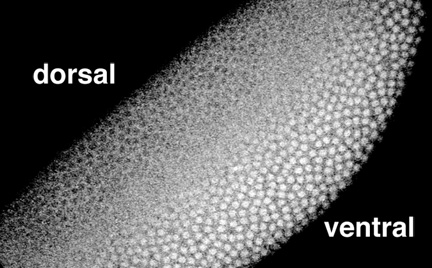
The Toll signal transduction pathway establishes the dorsoventral axis
of the fly embryo. Localized activation of the transmembrane
receptor Toll leads to the graded nuclear translocation of the
transcription factor Dorsal. By activation of ventral-specific loci and
repression of dorsal-specific loci, the Dorsal gradient establishes
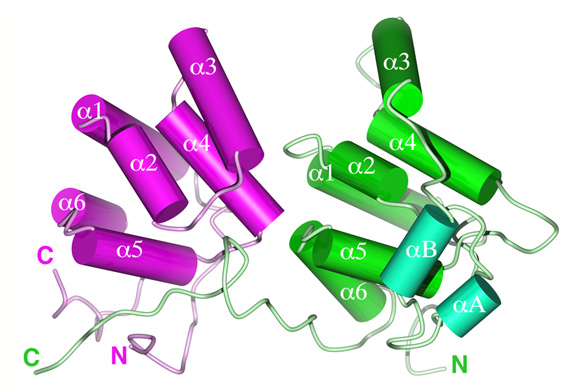
subdivides the dorsoventral axis. Dorsal protein is initially present
throughout the embryonic cytoplasm, bound to an inhibitor, Cactus, that
blocks nuclear translocation. Following fertilization, localized
cleavage of the ligand Spätzle activates Toll in a graded ventral
to dorsal pattern over the embryo surface. Signaling by activated Toll
triggers degradation of Cactus, freeing Dorsal protein to direct gene
expression.
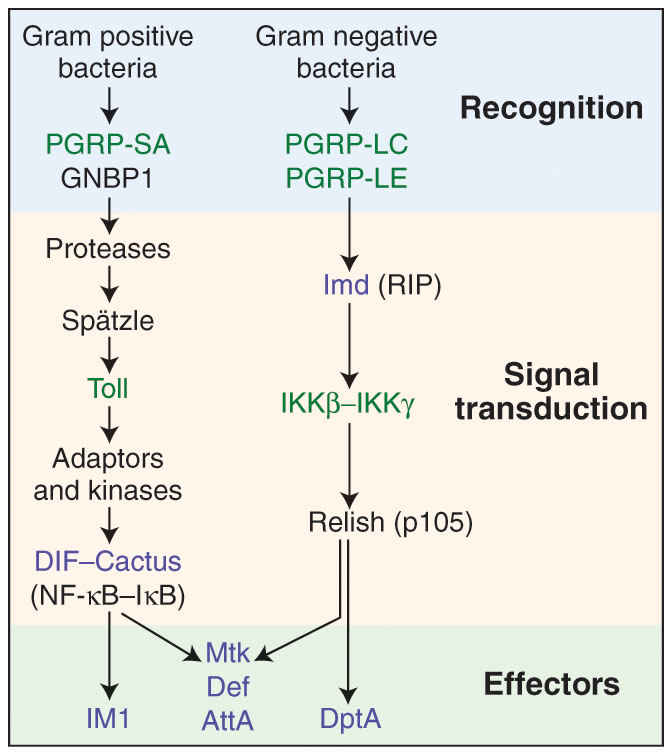
Toll also functions as part of the innate immune response to
microbial infection. Upon exposure to a fungal pathogen, wild-type
flies express an array of genes encoding anti-microbial peptides,
including Drosomycin, a potent anti-fungal agent. The transcription
factor activated by Toll in this setting is the Drosophila Immunity
Factor (DIF), which, like Dorsal, belongs to the NF-kB protein family.
In mammals, Toll-like receptors (TLR’s) activate NF-kB as a critical
step in innate immune response to infection.
The Research link at the top of
the page provides an overview of our current research efforts in this
area.